SC-AS/NZS3112-F3.7
Product overview
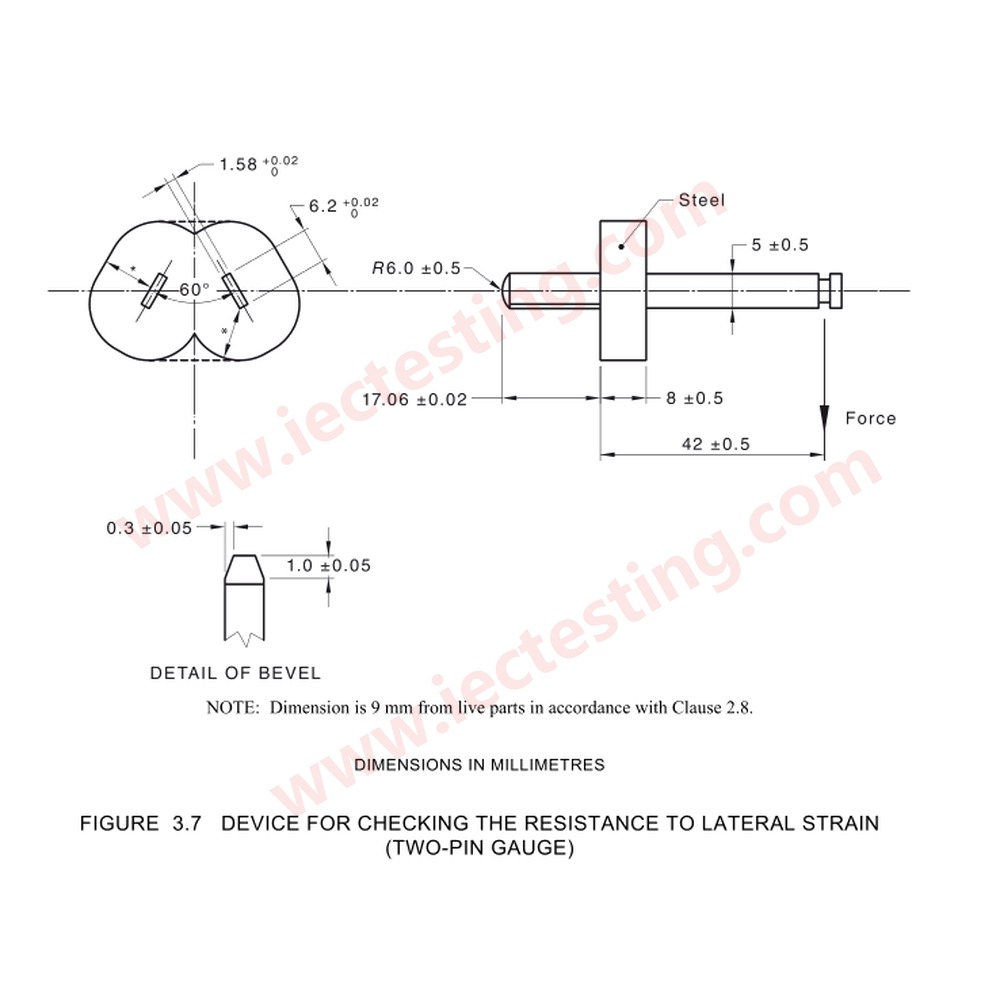
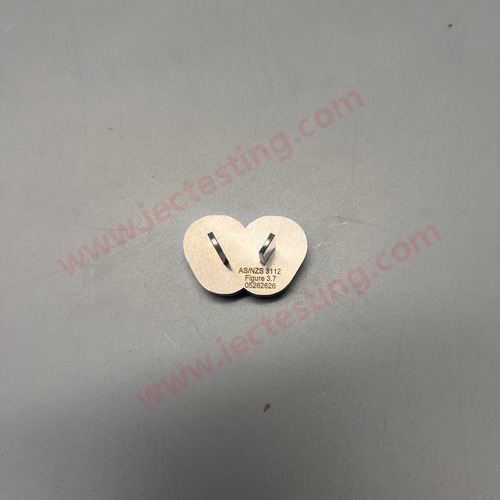
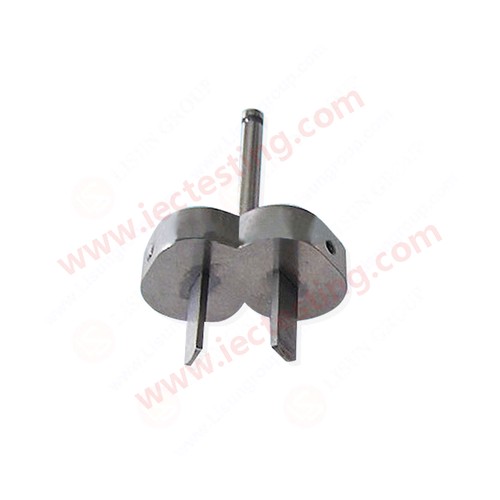
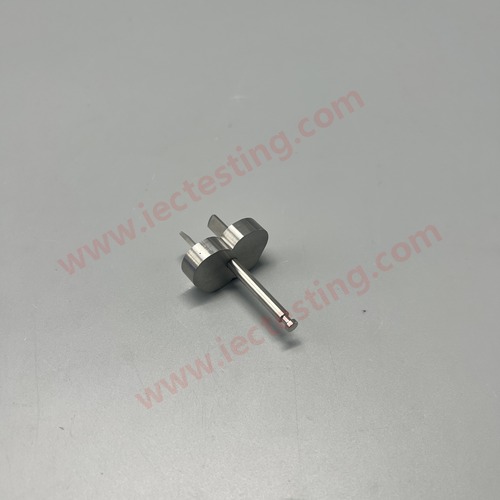
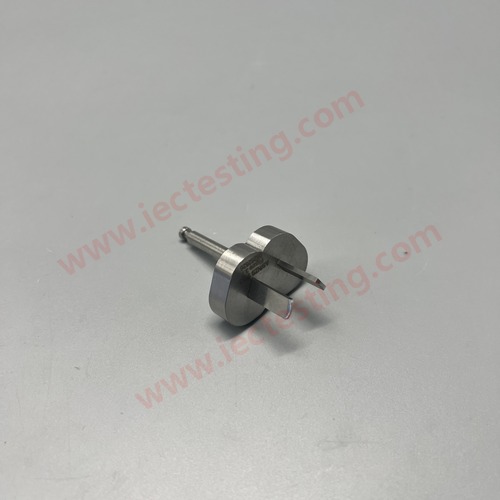
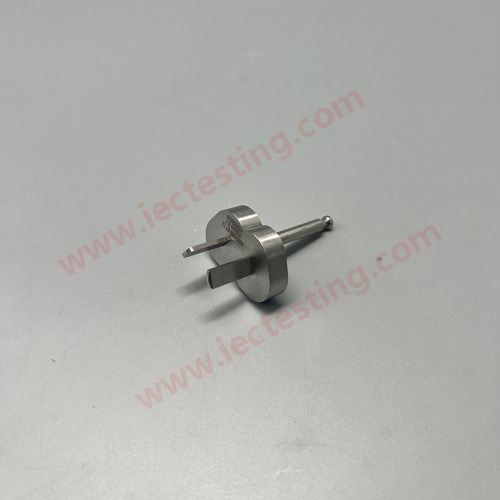
Device for Checking The Resistance to Lateral Strain (Two-Pin Gauge) According to AS/NZS 3112 Figure 3.7 is specialized in evaluating the resistance to lateral strain of plugs and sockets that comply with the Australian/New Zealand Standard AS/NZS 3112. Precisely crafted to align with the technical specifications outlined in AS/NZS 3112 Figure 3.7, it features high-precision dimensional control, durable steel construction, and excellent structural stability—ensuring accurate and repeatable test results for verifying product compliance and mechanical reliability.
Specification
- Complies with AS/NZS 3112 “Approval and test specification – Plugs and socket – outlets” Figure 3.7
- Material: High-quality steel with wear-resistant properties
- Material hardness: Exceeds 50HRC for long-term use without deformation
- Thermal expansion coefficient: Low, maintaining dimensional stability across different test environments
- Key dimensions and tolerances: Conform to standard requirements (including 1.58±0.02mm, 6.2±0.02mm, 19.94±0.02mm, 42±0.5mm, R6.0±0.5mm, R20mm, 60° bevel angle, 0.3±0.05mm, 5±0.5mm)
- Surface finish: Smooth with specified roughness to avoid damaging test samples
- Pin configuration: Two pins with uniform width, thickness, and spacing as per standard
Test procedure
- Prepare the AS/NZS 3112-compliant plug or socket sample, ensuring it is free from scratches, cracks, deformation, or any defects that may affect test validity.
- Inspect the two-pin gauge to confirm it is clean, free of debris or wear, and its critical dimensions are within the specified tolerance range.
- Secure the sample in a stable test fixture to prevent displacement during the application of lateral force.
- Align the two pins of the gauge with the corresponding contact positions of the sample strictly in accordance with AS/NZS 3112 Figure 3.7 guidelines.
- Apply the standard-specified lateral force to the gauge in a steady, uniform manner, avoiding sudden or uneven pressure.
- Maintain the applied lateral force for the duration required by the AS/NZS 3112 standard to assess the sample’s resistance capability.
- After the specified force duration, gently remove the gauge and visually inspect the sample for structural damage, loosening, or permanent deformation.
- Document all test parameters (including applied force, duration, and sample condition) and determine if the sample meets AS/NZS 3112 compliance requirements based on the observations.
Application
- Lateral strain resistance testing of two-pin plugs and sockets manufactured to AS/NZS 3112 standards
- Quality control and compliance inspection in electrical product manufacturing facilities
- Mechanical performance evaluation during R&D of plug and socket products for Australian/New Zealand markets
- Routine quality audits and batch inspection of electrical connectors
- Compliance certification testing for manufacturers seeking market access in Australia and New Zealand
- Quality verification of plug and socket accessories used in household, commercial, or industrial electrical systems
Product pictures
Standard drawing