
Standing Child Foot Probe SC-60335-F107 – IEC 60335-2-107:2017 Figure 107 / GB/T 4706.110-2021
The Standing Child Foot Probe SC-60335-F107 is manufactured in accordance with IEC 60335-2-107:2017 Figure 107 / GB/T 4706.110-2021. It is used to verify the guarding of blade housings and enclosure openings of robotic lawnmowers and similar household garden machinery, determining whether a child’s foot/leg can reach the rotating blade or other hazardous moving parts through an opening. The SC-60335-F107 simulates a standing child foot and lower leg and is the companion test tool for IEC 60335-2-107 lawnmower safety testing.
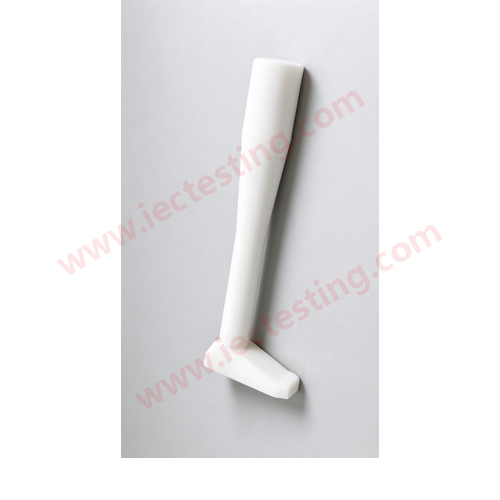
Technical Parameters
| Item | Parameter |
|---|---|
| Standard figure | IEC 60335-2-107:2017 Figure 107 |
| Simulates | standing child foot and lower leg |
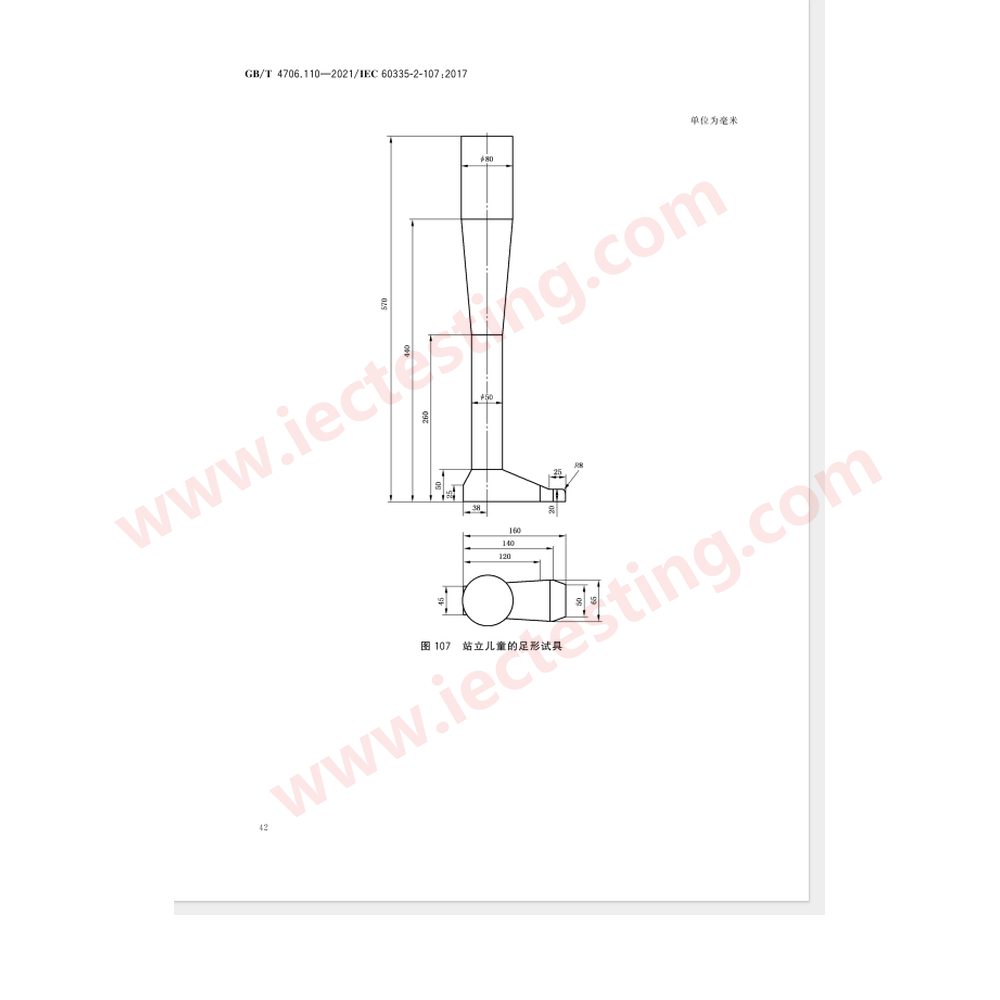
| Shank diameter | φ80 at top, tapering to φ60 |
| Overall length | 500 mm |
| Foot length | 160 (width 140/130) |
| Foot thickness | 30/40 |
Construction & Material
The foot simulator is laser-cut from basswood and connected to a metal guide rod, with a smoothly finished surface. Machined to the key dimensions shown on the standard figure, with tolerances per the drawing; supplied with a dedicated storage case.
Standard Drawing
Test Method & Acceptance
- 1) Select the corresponding foot probe per the equipment under test (SC-60335-F107 simulates a standing child foot and lower leg);
- 2) Insert the probe through the enclosure opening and advance it along the intended path until it meets the stop;
- 3) Apply the force specified by the relevant clause, varying the insertion angle if required, to simulate the reachable range of a child’s foot;
- 4) Observe whether the probe tip can touch the blade, blade disc or other hazardous moving parts; reachability indicates inadequate guarding.