
Test plug manufactured to BS 1363-2 Figure 30, used for temperature rise tests on 13 A socket-outlets with a load that reproduces the heating of a plug in normal service.
Product identification
| Item | Specification |
|---|---|
| Model | SC-BS1363-F30 |
| Figure | Figure 30 – Test plug for temperature rise |
| Product | BS1363 Figure 30 Test Plug for Temperature Rise |
Product photos
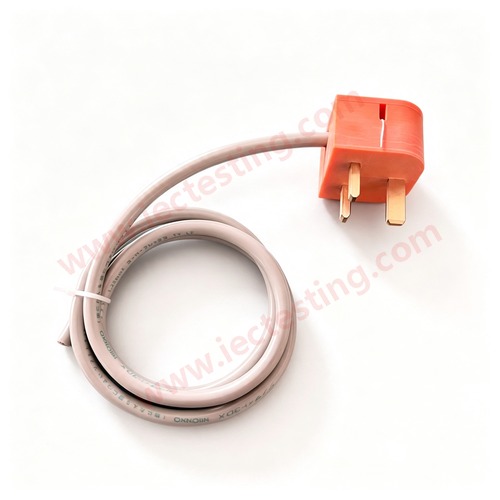
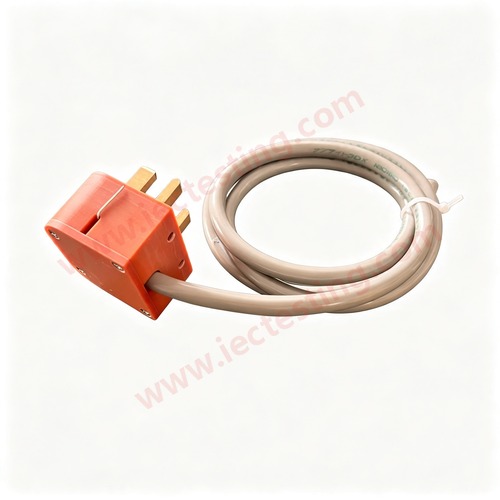
Application and test method
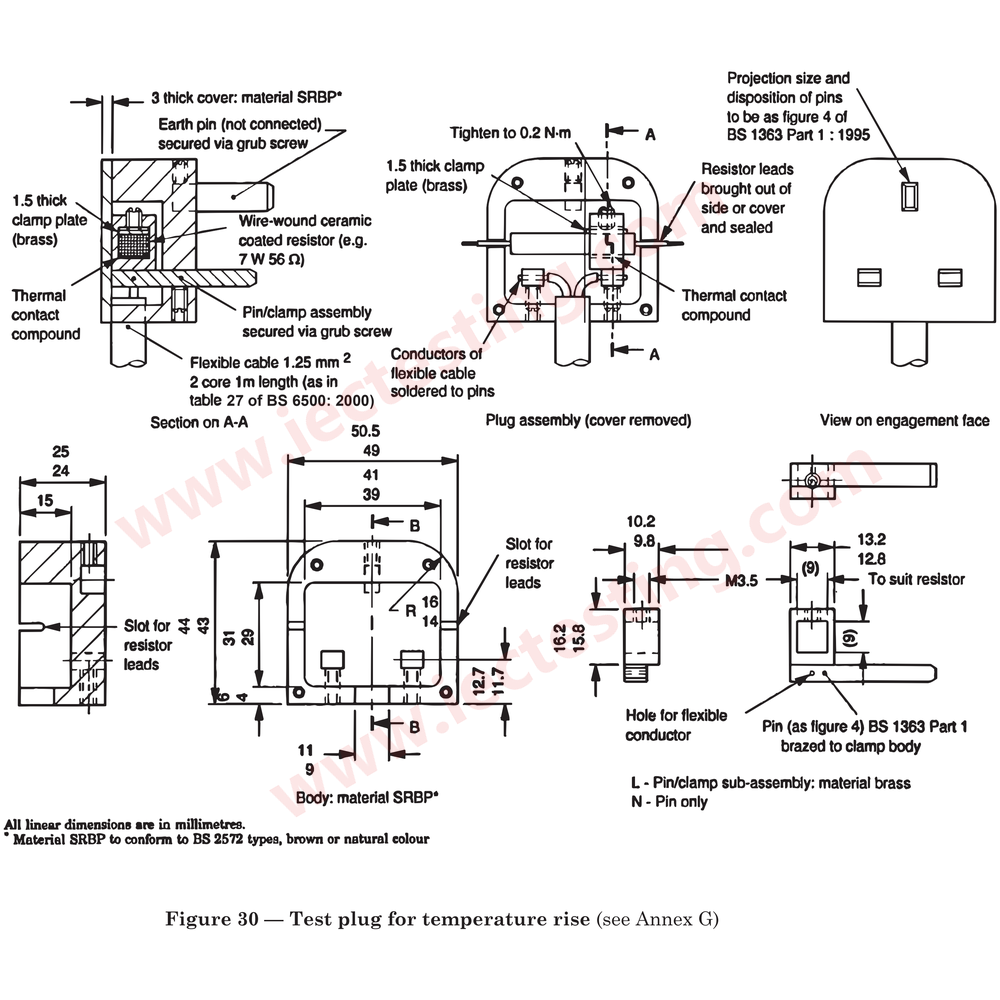
Insert the test plug into the socket-outlet under test, connect per Figure 30 and Annex G and pass the test current. Measure the temperature rise of the socket contacts and pins with thermocouples. The resistor rating, its position and the length of the flexible cable are all fixed by the standard so that the heat distribution is comparable between laboratories.
Technical data
| Item | Specification |
|---|---|
| Standard | BS 1363-2:1995 incl. amendments, BS 1363-3:1995 |
| Figure | Figure 30 – Test plug for temperature rise |
| Internal element | Wire-wound ceramic resistor 7 W 56 ohm (typical), thermal contact compound |
| Construction | 3 mm SRBP cover + 1.5 mm brass clamp plate, pin / clamp assembly secured by grub screw |
| Pins | Dimensions and disposition to BS 1363-1 Figure 4 |
| Cable | 1.25 mm2, 2 core, 1 m length (per BS 6500 table 27) |
| Body material | SRBP to BS 2572, brown or natural |
| Marking | Figure 30 + serial number |
Standard drawing
Handling and maintenance
Temperature rise results depend on resistor rating, cable length and thermocouple placement. Check the resistor value before every test and wire strictly to Annex G.
For the complete BS 1363 range of gauges and test apparatus, contact Guangzhou Shice Instrument for selection and quotation.