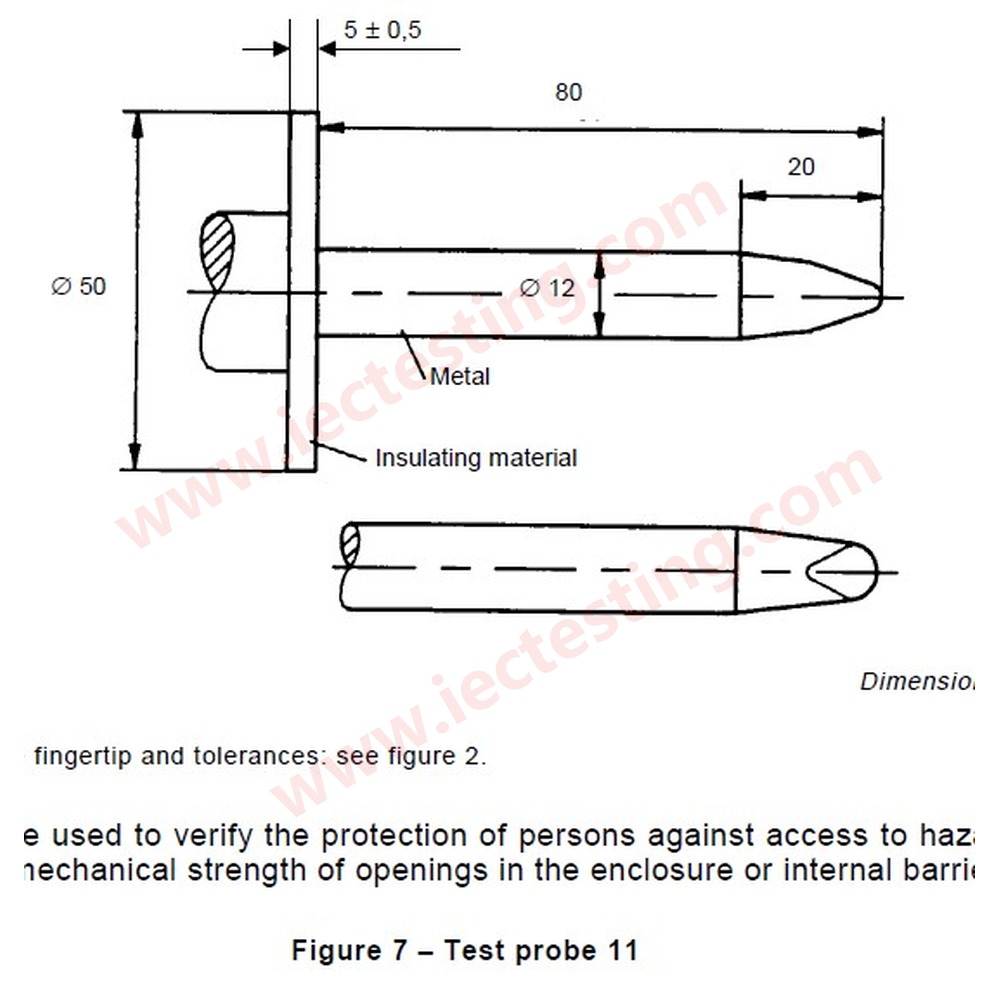
Test Probe 11 Rigid Test Finger with a diameter of 12 mm and a length of 80 mm
SC-0211
Product information:
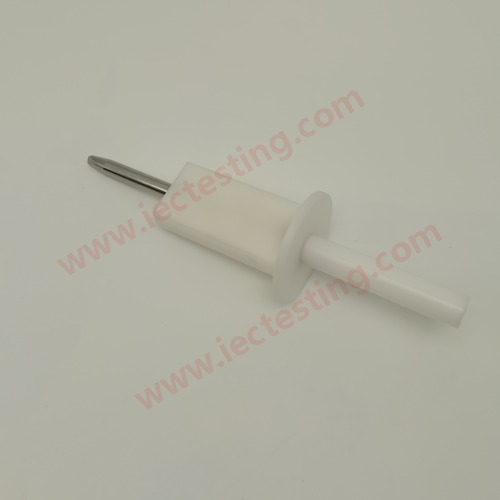
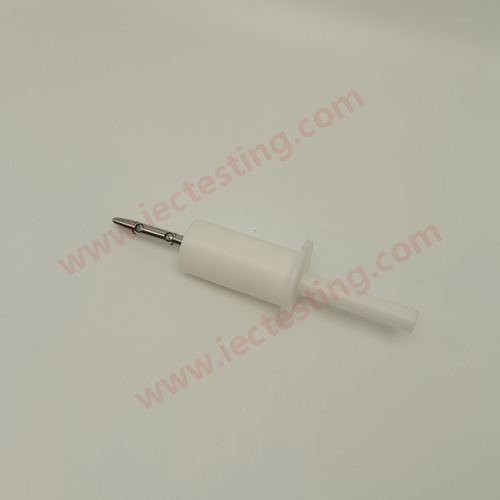
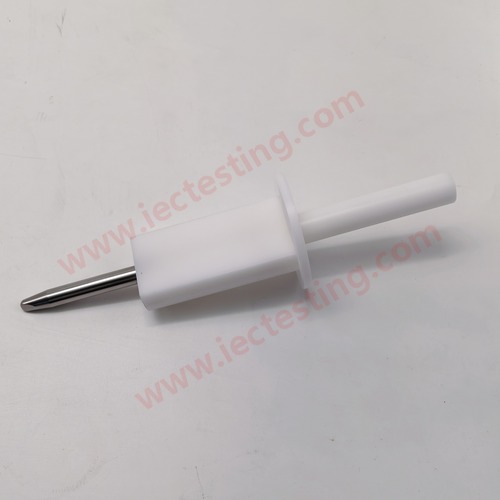
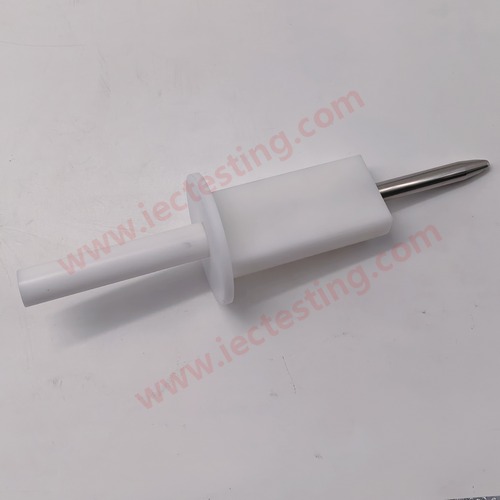
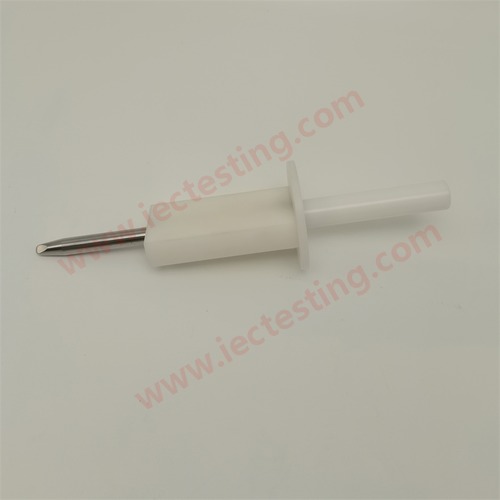
Product No: SC-0211. The Rigid Test Finger with Non-Circular Stop Face is equipped with a nodular finger that has a diameter of 12 mm and a length of 80 mm.
IEC 61032 Figure 7 (Test Probe 11) Rigid Test Finger with Non-Circular Stop Face is a specialized safety tool designed to simulate human finger access, verifying whether hazardous live or mechanical parts in electrical equipment remain inaccessible. It features a rigid stainless steel “finger” for consistent testing and a non-circular stop face (e.g., rectangular or hexagonal) that prevents over-insertion into equipment enclosures. Paired with an insulating nylon handle for safe grip, it is essential for compliance checks across appliances, IT devices and industrial equipment, ensuring end-user protection from electric shock or mechanical harm.
Customizable: it can be used for the anti-electric shock test when equipped with an amphenol connector, or for the enclosure protection test when the threaded hole of M6 at the end of the handle is opened (connected with a pull and push dynamometer).
Product pictures:
Technical parameters:
| Probe type | Rigid Test Finger with Non-Circular Stop Face (IEC 61032 Figure 7 / Test Probe 11 compliant) |
| Finger material | Stainless steel (rigid, corrosion-resistant, maintains dimensional accuracy) |
| Handle material | Nylon (insulating, non-slip, heat-resistant for safe operation) |
| Stop face | Non-circular |
| Finger diameter | 12 mm ± 0.1 mm |
| Finger length (effective) | 80 mm ± 0.2 mm |
| Total length (finger + handle) | 180 mm ± 0.5 mm |
| Thrust specification | Not inherently applied by the probe itself. When a governing standard (e.g., IEC 60335, GB 4706) requires a specific force such as 10 N, 30 N or 50 N, the handle can be configured with an optional push-pull gauge to meet those requirements. |
| Core function | Simulates human finger access to verify inaccessibility of hazardous live / mechanical parts in equipment |
Test procedures:
- Inspect the test finger for damage (e.g., bent steel, cracked handle, deformed stop face).
- Power on the electrical equipment and let it reach normal operating mode.
- Set up the required force (if any) according to the governing standard — using a force gauge if specified — or proceed with no force if the test method permits.
- Hold the nylon handle and align the stainless steel finger with equipment openings.
- If a specific force is required by the relevant standard, apply the corresponding thrust (e.g., 10 N) using a push-pull gauge; otherwise insert the finger without applying any additional force.
- Check whether the finger touches any dangerous components (live wires, moving parts).
- Record whether the equipment meets safety requirements (pass / fail).
Applications:
- Safety testing of household appliances (e.g., refrigerators, washing machines).
- Compliance checks for IT / AV equipment (e.g., laptops, soundbars) to block finger access to hazards.
- Verification of small industrial control panels (e.g., workshop sensors).
- Quality control for home medical auxiliary devices (e.g., air purifiers) during manufacturing.
- Post-production safety audits of portable electric tools (e.g., handheld drills) to ensure hazard inaccessibility.
Related products:
- Rigid Test Finger Probe 11 IEC61032 Figure 7 SC-F711
- Rigid Test Finger Probe 11 with 50N Force IEC61032 Figure 7 SC-F711-F2
- Rigid Test Finger Probe 11 with 75N Force IEC61032 Figure 7 SC-F711-F3
Standard drawing: